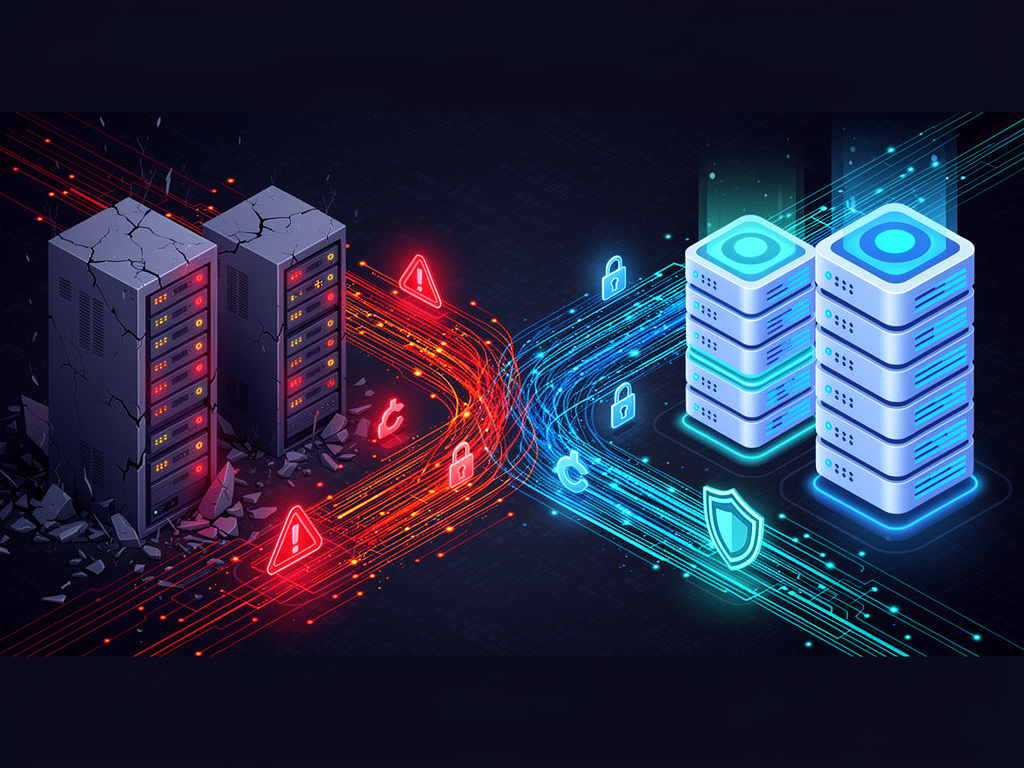
Critical Proxmox VE 7 Vulnerability: Why EOL Virtualization Poses Extreme Risks
Critical Proxmox VE 7 Vulnerability: Why EOL Virtualization Poses Extreme Risks
Proxmox VE, a widely adopted open-source virtualization platform, has recently been at the center of a significant cybersecurity alert. A critical vulnerability in Proxmox VE 7.x — its entire seven-series branch — allows authentication bypass and remote code execution (RCE), granting attackers root-level access without a password. This flaw, discovered by NebuSec, underscores the profound risks of running End-of-Life (EOL) software in enterprise environments. Coverage such as RedesZone’s report on the critical Proxmox VE 7 flaw highlights how urgent this issue is for teams still on the 7.x line.
The Gravity of the Proxmox VE 7.x Vulnerability
The vulnerability is described as a pre-authentication RCE and is alarmingly straightforward to exploit. Attackers can leverage a specific JavaScript payload with the username root@pam and password root@pam to gain full superuser control over the affected system. That level of access grants complete dominion: reading and modifying virtual machine disks, extracting sensitive credentials, deploying ransomware, and taking virtualized services offline. The impact on business continuity and data integrity can be catastrophic.
The timing of this disclosure is particularly critical because Proxmox VE 7 reached End-of-Life on July 31, 2024. Proxmox will not release patches or security updates for this version. Organizations still running Proxmox VE 7.x are exposed to an unpatchable flaw that is now publicly known and actively exploited, as reflected in recent ransomware reports in Proxmox community forums.
Understanding End-of-Life (EOL) Software Risks
The Proxmox VE 7 incident is a stark reminder of why EOL software is a major cybersecurity liability. When software reaches EOL, the vendor ceases to provide:
- Security patches: New vulnerabilities, like the one in Proxmox VE 7, will not be addressed, leaving systems permanently exposed.
- Bug fixes: Non-security bugs can accumulate, leading to instability and performance issues.
- Technical support: Organizations lose official vendor support, making troubleshooting slower and harder.
- Compliance: Running EOL software can violate regulatory standards (e.g., GDPR, HIPAA, ISO 27001), with fines and reputational damage as possible outcomes.
- Compatibility issues: As other IT components are updated, EOL software can hinder integration and overall system functionality.
For virtualization platforms, these risks are amplified. Hypervisors are the foundation of modern IT infrastructure, hosting critical applications, databases, and sensitive data. A compromise at this level can collapse operations, enable extensive data breaches, and cause long-term reputational harm.
Technical Implications for Enterprise Infrastructure
With root access, an attacker can:
- Extract sensitive data: Access VM images, configurations, and data stored within the VMs.
- Install backdoors: Establish persistent access for future attacks.
- Deploy malware or ransomware: Encrypt virtual disks and hold the virtualized environment hostage.
- Manipulate system logs: Cover tracks and complicate forensic analysis.
- Pivot to other systems: Use the compromised hypervisor for lateral movement toward other critical assets.
The most immediate technical recommendation is to isolate any Proxmox VE 7.x instance from the internet. That is only a temporary measure: internal compromise or insider threats could still exploit the flaw. The only robust solution is to upgrade.
Business Risks and Impact
The business implications are far-reaching:
- Operational downtime: Loss of virtualized services can halt operations, revenue, and customer trust.
- Data breach costs: Notification, legal fees, credit monitoring, and regulatory fines can be immense.
- Reputational damage: A public security incident can erode brand image and long-term viability.
- Compliance violations: Non-compliance with data protection rules can trigger severe penalties.
- Resource drain: Incident response diverts IT capacity away from strategic work.
Actionable Recommendations and ITCS VIP Services
Immediate action is paramount for any organization still using Proxmox VE 7.x or other EOL infrastructure:
- Immediate isolation: If upgrading is not immediately feasible, never expose the Proxmox VE 7.x administration interface to the public internet. Restrict access to a secure management network, ideally behind a VPN or bastion host.
- Prioritize upgrade: Upgrade to supported Proxmox VE versions (e.g., 8.x or 9.x) as soon as possible. These versions are not affected by this specific vulnerability and receive ongoing security updates.
- Comprehensive patch management: Apply timely security updates across software, operating systems, and firmware.
- Regular security audits: Run periodic vulnerability assessments and penetration testing to find weaknesses early.
- Incident response plan: Develop and regularly test detection, containment, and recovery procedures.
- Employee training: Educate staff on cybersecurity hygiene, including phishing and social engineering.
At ITCS VIP, we help organizations navigate complex infrastructure challenges and strengthen cybersecurity posture. Our professional services align directly with mitigating risks like the Proxmox VE 7.x vulnerability:
- Infrastructure modernization & upgrades: Expert guidance and execution for upgrading virtualization platforms to supported, secure versions such as Proxmox VE 8.x/9.x or alternative hypervisors.
- Proactive maintenance & patch management: Continuous monitoring and timely application of critical security patches.
- Hardening & security audits: Assessments of virtualized environments, misconfiguration remediation, and attack-surface reduction.
- Managed security services: Endpoint protection, network segmentation, and threat detection to protect critical assets around the clock.
- Disaster recovery & business continuity: Resilient backup and recovery strategies that minimize downtime after an attack.
Conclusion
The critical vulnerability in Proxmox VE 7.x is a powerful reminder of the dangers of EOL software. In today’s threat landscape, proactive security and current infrastructure are essential for business survival. Ignoring EOL warnings can turn a seemingly stable environment into a ticking time bomb for data, operations, and reputation.
Don’t let EOL software be the weakest link in your cybersecurity chain. Engage with ITCS VIP to assess your infrastructure, build a strategic upgrade roadmap, and fortify defenses against evolving threats — so your virtualization platforms stay performant, resilient, and secure.